
2019 Winners | Derry Well Women

Derry Well Women
Winner – Improving Impact – charities with 4-25 paid staff
Who they are
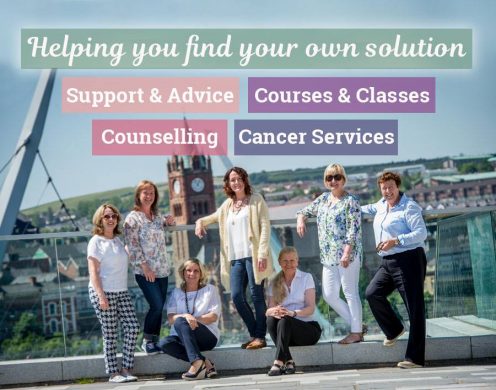
Founded in 1988, Derry Well Women (DWW) identifies and addresses the health and social care needs of women, families and communities in Derry and the North West region, providing responsive holistic services relating to women’s physical and mental wellbeing to more than 2,500 service users per annum. These services include chronic condition management of cancer, diabetes and MS. The charity’s generic counselling service offers specialist counselling in miscarriage, eating disorders, cancer, and domestic violence. DWW is committed to a broad and inclusive provision shaped by the cultural diversity of its community of users.
What they’ve achieved
Carrying society’s primary burden of care, women are the most severely impacted by strategic changes in health and social care provision that places greater onus on community- or home-based care. Often hidden, carers are impacted by stress, isolation and the sense of helplessness. Derry Well Women identified a burgeoning need, a gap in services and a lack of recognition or value for women carers in its community. Trustees recognised that women carers required more support and encouraged the design of new programmes (as well as new community partnerships) to provide that support. Through extensive research and a co-design process with women carers in the community, Derry Well Women created “The Carer’s Agenda” to provide practical and social support to more than 250 women carers in the programme’s first year.
Why they won
Derry Well Women has achieved significant impact in the face of uphill struggles. The board had a clear leadership role ushering in strategic changes for the charity. Trustees exhibited exceptional leadership throughout the design, implementation and ongoing monitoring processes of the charity’s new programmes. There was evidence that the board provided strategic oversight to ensure the project was aligned to the charity’s ethos, mission and vision; that it met all requirements for legal compliance and safeguarding; that the project applied principles of equality, diversity and good practice; and that appropriate measures were put in place for monitoring success and maintaining healthy stakeholder relationships.
